
Wiz AI 2026: Features, Funding & Why Google Acquired It for $32 Billion
March 20, 2026 | Gudstory Org AI News
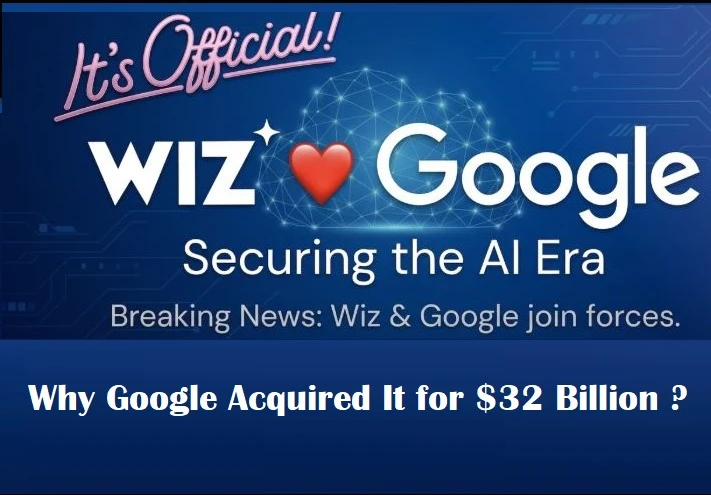
Thank you for reading this post, don't forget to subscribe!When Google officially closed its $32 billion acquisition of Wiz AI on March 11, 2026, it wasn’t just writing the largest check in its own corporate history — it was reshaping the entire landscape of cloud security. The deal, the biggest-ever purchase of a venture-backed startup, sent shockwaves through Silicon Valley and beyond, raising a simple but important question: What exactly is Wiz, and why was it worth that much?
If you haven’t been following the cybersecurity world closely, Wiz might be a new name to you. But inside enterprise IT departments and venture capital boardrooms, this Israeli-founded company has been the talk of the town for years. Let’s break down the whole story — from its scrappy founding in a global pandemic to the moment it became a $32 billion crown jewel for one of the world’s most powerful technology companies.
Born in a Pandemic, Built for the Cloud Era
Wiz was founded in early 2020, right as COVID-19 was forcing organizations worldwide to rapidly migrate their operations online. That mass digital migration created a massive, urgent problem: cloud environments were expanding faster than anyone knew how to secure them. Traditional security tools were simply not built for the scale and complexity of modern cloud infrastructure.
The four founders — Assaf Rappaport (CEO), Ami Luttwak (CTO), Yinon Costica (VP Product), and Roy Reznik (VP R&D) — were not strangers to solving hard security problems. All four had served together in the elite Israeli military intelligence unit 8200, a program with an extraordinary track record of producing serial tech entrepreneurs. After leaving the military, the team had previously built Adallom, a cloud security company that Microsoft acquired for approximately $340 million. Following that acquisition, they led Microsoft’s cybersecurity operations in Israel before striking out on their own again to start Wiz.
“Wiz was born into a global pandemic and then a long war at home,” co-founder Yinon Costica noted on LinkedIn. The odds seemed stacked against them, yet the timing turned out to be uncannily perfect.
“Wiz is at the center of three tailwinds: AI, cloud, and security spend.” — Shardul Shah, Index Ventures
What Does Wiz Actually Do?
At its core, Wiz is a cloud and AI security platform — but that description barely scratches the surface of what makes it special. Traditional security tools tend to work in silos, monitoring one layer of an organization’s infrastructure at a time. Wiz takes a fundamentally different approach: it connects source code, cloud infrastructure, and live running workloads into a single, unified view.
Think of it like this — if your organization’s digital environment were a building, most security tools would only monitor individual rooms. Wiz monitors the entire building simultaneously, from the foundation to the roof, and tells you exactly which door is unlocked and which window is cracked open.
Here are the key features that set Wiz apart in 2026:
Wiz AI Security Platform: As generative AI has gone from experimental to production-grade, it has created entirely new attack surfaces. The Wiz AI Security Platform addresses this head-on, providing deep visibility into how AI tools are being used inside organizations, identifying AI-native risks, and protecting AI workloads as they run in real time.
Wiz Exposure Management: This capability gives security teams a single, proactive view of risk across their entire environment — unifying vulnerability management and attack surface tracking from code all the way to cloud and on-premises infrastructure. Instead of drowning in alerts, teams can focus on the risks that truly matter.
AI Security Agents: These are purpose-built AI agents designed to help security teams investigate, prioritize, and remediate risks at machine speed. Rather than relying solely on human analysts who can only process so many alerts per day, Wiz’s agents operate continuously, powered by rich contextual data about code, cloud, and runtime environments.
WizOS: A new offering launched over the past year, WizOS provides hardened container base images with near-zero CVEs (Common Vulnerabilities and Exposures). It gives developers a trusted, secure foundation right from the very first line of code — essentially baking security into the development process rather than bolting it on afterwards.
Multi-Cloud Support: One of Wiz’s most commercially valuable features is that it works seamlessly across all major cloud providers — Amazon Web Services (AWS), Microsoft Azure, Google Cloud Platform, and Oracle Cloud. In an era where most large organizations operate across multiple clouds, having a security tool that doesn’t play favorites is enormously valuable.
Wiz Research: The company’s dedicated research team has been responsible for uncovering some of the most significant security vulnerabilities in recent memory, including RediShell (a remote code execution flaw in Redis), CodeBreach (a supply chain vulnerability affecting the AWS console), and NVIDIAScape (a container escape vulnerability tied to shared AI infrastructure). These discoveries protect not just Wiz’s customers but the broader cloud ecosystem.
The Funding Journey: From $21M Seed to $12B Valuation
Wiz’s fundraising history reads like a masterclass in building momentum at exactly the right time. The company raised approximately $1.9 billion in total before the Google acquisition, across six rounds:
Seed Round (February 2020): $21 million at a post-money valuation of $67 million. This was the very beginning, with Index Ventures’ Shardul Shah joining the board on Assaf Rappaport’s birthday phone call.
Series A (December 2020): $100 million at a $500 million valuation — a tenfold valuation jump in under a year, reflecting explosive early traction.
Series B (March–May 2021): $250 million at a $1.7 billion valuation. Wiz had officially crossed into unicorn territory.
Series C (October 2021): Another $250 million, this time at a $6 billion valuation, placing Wiz firmly among the most valuable security startups in the world.
Series D (February 2023): $300 million at a $10 billion valuation, raised amid a broader tech market downturn that saw many startups struggle. Wiz’s ability to raise at this valuation during difficult market conditions spoke volumes about investor confidence.
Series E (May 2024): A landmark $1 billion round at a $12 billion valuation, setting a new record for the largest funding round ever in cybersecurity. By this point, the company had turned down a $23 billion acquisition offer from Google, betting that it could command even more.
The company’s major backers included Index Ventures (approximately 12% stake, worth around $3.8 billion at acquisition), Sequoia Capital (around 10%, worth approximately $3.2 billion), and Insight Partners (estimated $2.9 billion). The first investor, Cyberstarts — a venture fund founded by Gili Raanan — retains a stake worth around $1.5 billion after selling a portion to Blackstone in 2021.
Wiz crossed $1 billion in annual recurring revenue in 2025, serving roughly half of the Fortune 100.
Why Google Paid $32 Billion: The Strategic Logic
On the surface, $32 billion for a company that didn’t exist six years ago might sound like a staggering gamble. But when you look at the strategic picture Google is painting, the logic becomes clear.
The cloud security market is undergoing a fundamental shift. Organizations are no longer just moving data and applications to the cloud — they are building AI-powered systems in the cloud, and those systems are being targeted by attackers who are also using AI. The threat surface is expanding at unprecedented speed.
Google Cloud has long competed in the shadow of AWS and Microsoft Azure. One of the key battlegrounds for enterprise clients is security: which cloud provider can offer the most comprehensive, trustworthy security framework for sensitive workloads? By acquiring Wiz, Google doesn’t just add a security product — it acquires a neutral, trusted security platform that enterprise clients already use across every major cloud, including Google’s competitors.
This is the multi-cloud play. As Thomas Kurian, CEO of Google Cloud, put it, the goal is to make security a catalyst for innovation rather than a barrier. The combined platform will provide unified security from code to cloud to runtime, with Mandiant’s threat intelligence layered in alongside Wiz’s cloud expertise and Google’s AI capabilities.
For the broader startup ecosystem, the deal also matters enormously. The four Wiz founders collectively hold about 40% of the company — meaning this acquisition delivers life-changing returns not just for them but for roughly 1,800 employees worldwide, around 1,000 of whom are based in Israel. Google has also set aside approximately $1.5 billion in retention bonuses for employees who stay on after the acquisition, paid in a mix of cash and Google shares.
The deal will funnel an estimated $3.2 billion into Israel’s state coffers in tax proceeds alone — making it the largest exit in Israeli tech history by a wide margin.
The Rejected Offer and the Second Chance
One of the most compelling subplots of this story is that Google already tried to buy Wiz — and was turned away. In July 2024, Google put a $23 billion offer on the table. Wiz’s founders and board made the audacious decision to say no, betting that continued independent growth would be worth more than a quick exit.
They were right. By early 2025, Wiz had crossed $1 billion in annual recurring revenue, its customer base had expanded to include roughly half of the Fortune 100, and the security market had continued to grow. When Google came back to the table in early 2025, the price had risen to $32 billion — nearly $10 billion more than the first offer.
The deal was announced in March 2025, received U.S. regulatory approval in November 2025, cleared European Union antitrust scrutiny in February 2026, and officially closed on March 11, 2026. It included a $3.2 billion termination fee clause in case regulators had blocked the deal — a measure of just how seriously both sides were committed.
What Happens Next?
Wiz will operate under Google Cloud while maintaining its own brand identity and its commitment to working across all major cloud platforms. This is a critical point: for Wiz’s existing customers — many of whom use AWS or Azure as their primary cloud — the acquisition doesn’t force a migration to Google Cloud. Wiz remains cloud-agnostic.
For Google, the integration roadmap includes combining Wiz’s platform with Mandiant’s threat intelligence and Google Cloud’s AI infrastructure to create what Sundar Pichai described as a tool to help organizations innovate with confidence. In practical terms, that means faster threat detection, more automated remediation, and a security platform that scales alongside AI adoption rather than struggling to keep up with it.
As Wiz CEO Assaf Rappaport put it: “Joining Google Cloud allows us to scale our mission of protecting customers wherever they operate — at machine speed.”
For the cybersecurity industry, this deal sends an unmistakable message: in the AI era, cloud security isn’t a nice-to-have feature. It’s infrastructure. And companies that can credibly deliver it across the entire cloud ecosystem — from code to runtime, across all providers — are worth tens of billions of dollars.
The Bottom Line
Wiz’s journey from a $21 million seed round in 2020 to a $32 billion acquisition in 2026 is one of the most remarkable startup stories in recent memory. It was built on a genuine technical insight — that cloud security needed to think holistically rather than in silos — and executed by a team with the experience and credibility to convince the world’s largest enterprises to trust them with their most sensitive infrastructure.
Google didn’t acquire Wiz because it had no other options. It acquired Wiz because Wiz built something that Google recognized it could not easily replicate on its own: deep, trusted, multi-cloud security expertise with a platform that enterprises already rely on every day.
In an era where every serious digital workload runs on the cloud and increasingly depends on AI, securing that infrastructure isn’t just a business problem — it’s a civilization-level challenge. Wiz, now part of Google, is betting it can help solve it.